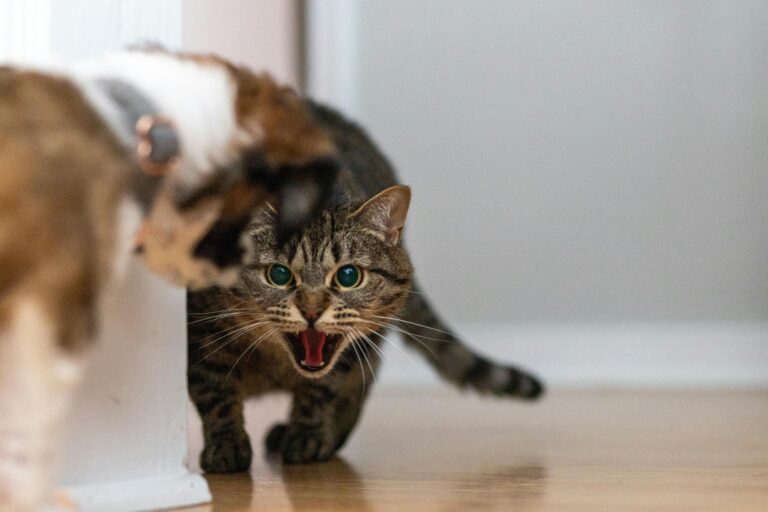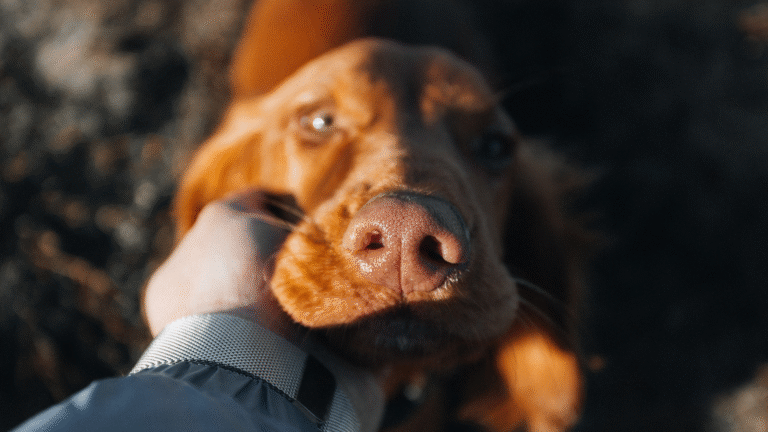

New Year’s Eve is a celebration for humans — but for pets, the experience can trigger one of the most stressful nights of the year. Every December, shelters, emergency clinics, and animal support services see an increase in runaway dogs, shock-related collapses, and even fatal complications caused by extreme fear responses to fireworks. For many pets, these reactions are not simply “anxiety.” They are full physiological emergencies involving sensory overload and dangerously high spikes of the stress hormone cortisol.
As we approach the holiday season, preparing your dog or cat in advance is an essential part of responsible pet ownership. The goal is to protect their mental health, physical safety, and emotional well-being — and ensure they don’t experience the kind of shock that leaves long-term trauma.
This guide combines veterinary insights, behavior science, and compassionate support strategies inspired by the care provided at Two by Two Pet Support, where helping families through crisis and emotional distress is at the heart of what we do.
Why Fireworks Trigger Extreme Reactions in Pets
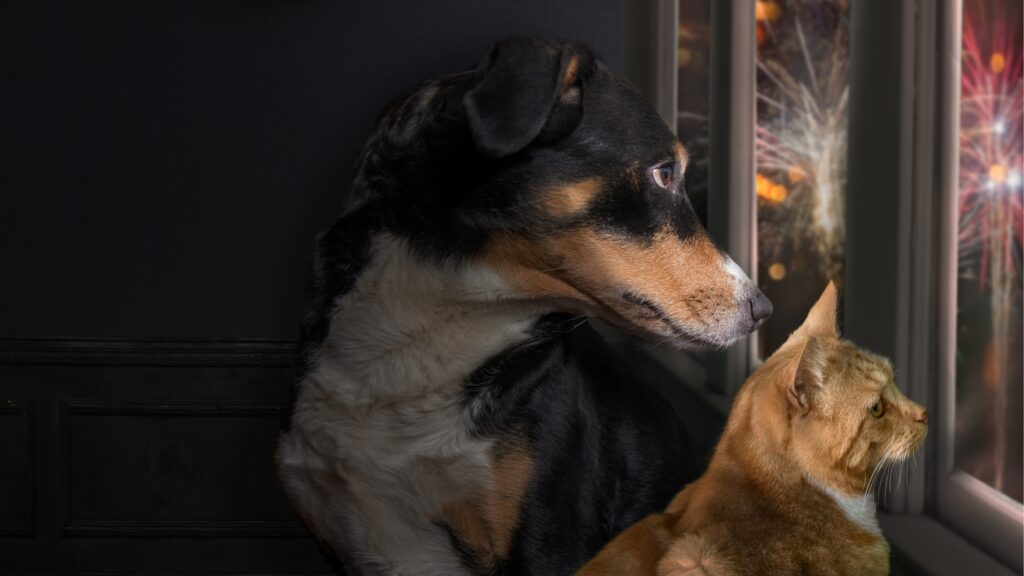
For humans, fireworks are expected. For pets, the sudden booms, flashes of light, and vibration-like pressure waves activate the brain’s fight-or-flight system instantly. Dogs and cats perceive loud, unpredictable noises as potential threats to their survival.
This perception triggers a hormonal chain reaction, causing the body to release adrenaline and cortisol. When cortisol levels rise rapidly, the heart rate spikes, breathing becomes shallow, muscles stiffen, and decision-making becomes impaired. For some pets, the panic becomes so intense that their body goes into acute stress shock, a dangerous state where collapse, disorientation, and even cardiac events can occur.
In a study published in Applied Animal Behaviour Science (you can reference: Beerda et al.), researchers found that sudden loud noises create measurable cortisol surges in dogs, with levels remaining elevated long after the noise stops. Cats, though often quieter in their response, experience similar hormonal patterns but may hide their distress more discreetly, making it harder for owners to notice early signs.
Dogs vs. Cats: How Fireworks Affect Them Differently
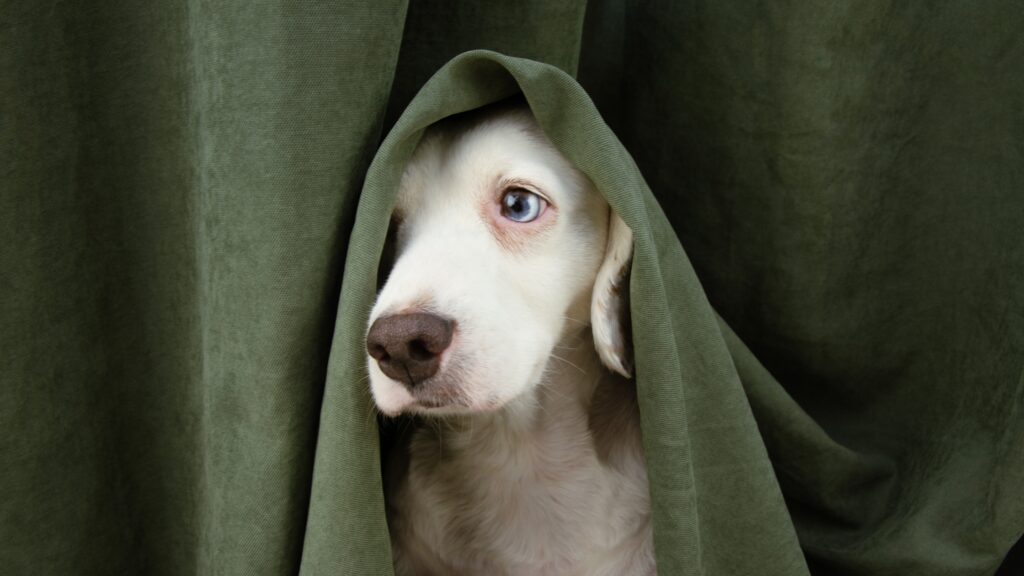
Although both species can suffer deeply from firework-related stress, their natural instincts shape their reactions.
Dogs tend to respond with overt panic. They may pace, shake violently, attempt to escape enclosures, jump fences, break through windows, scratch doors, or howl continuously. Many dogs run away blindly, and countless shelters report the highest volume of lost pets on New Year’s Eve and July 4th.
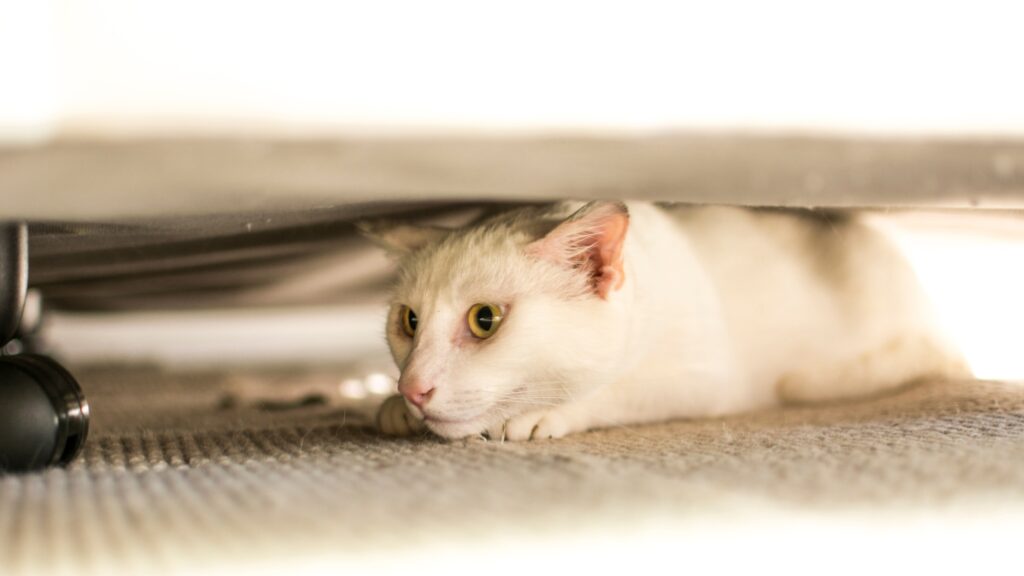
Cats, on the other hand, respond by withdrawing. They hide in closets, under beds, or inside cabinets. Their quietness can be misleading; internally, their stress response can be just as explosive as a dog’s. Cats are also at risk of darting through open doors or slipping through slightly open windows in an attempt to seek safety.
Because cats are masters at masking fear, owners often underestimate their level of distress — a mistake that can contribute to sensory shock or heat exhaustion if they hide in unsafe places like garages or tight spaces.
Understanding Shock in Pets — and Why It’s Deadly
Shock in animals isn’t only physical; it can be emotional or sensory-based, caused entirely by fear overload. During fireworks, many pets experience:
- rapid heart rate
- hyperventilation
- trembling or collapse
- confusion and disorientation
- loss of bladder or bowel control
- refusal to eat or move
- glassy or dilated eyes
If the stress is severe enough, the cardiovascular system can fail to regulate itself. This is why some dogs and cats tragically die during holiday fireworks from shock or stress-related complications. Early awareness and proactive planning are critical to preventing these outcomes.
A Quick Reference Table: How Pets React to Fear and What It Means
| Reaction | Dog Behavior | Cat Behavior | What It Indicates |
|---|---|---|---|
| Fight/Flight Activation | Barking, running, jumping fences | Hiding, darting away | High cortisol; body preparing for perceived danger |
| Panic Escalation | Trembling, drooling, destructive escape attempts | Rapid breathing, frenzied hiding | Risk of sensory overload; acute stress |
| Shutdown (Freeze Response) | Lying still, unresponsive | Silent, curled tightly | Possible shock; nervous system overload |
| Long-Term Effects | Regression, fear of loud noises | Avoidance, appetite changes | Post-traumatic stress patterns |
How to Prepare Weeks in Advance

The preparation for New Year’s Eve should ideally begin early. Your pet needs time to build resilience, understand routines, and feel safe before the first firework is even heard.
Start by creating a predictable environment. Pets rely heavily on routine, and predictability strengthens their sense of safety. Gradually introduce calming activities: gentle walks for dogs, enrichment play for cats, and interactive moments that promote bonding. The stronger your bond feels to them, the more secure they will be during frightening events.
Researchers from the University of Bristol’s School of Veterinary Science emphasize that environmental stability is one of the strongest protective factors against noise-phobia escalation. This means the everyday atmosphere you create at home matters just as much as the strategies you use on New Year’s Eve itself.
Creating a Safe Haven at Home
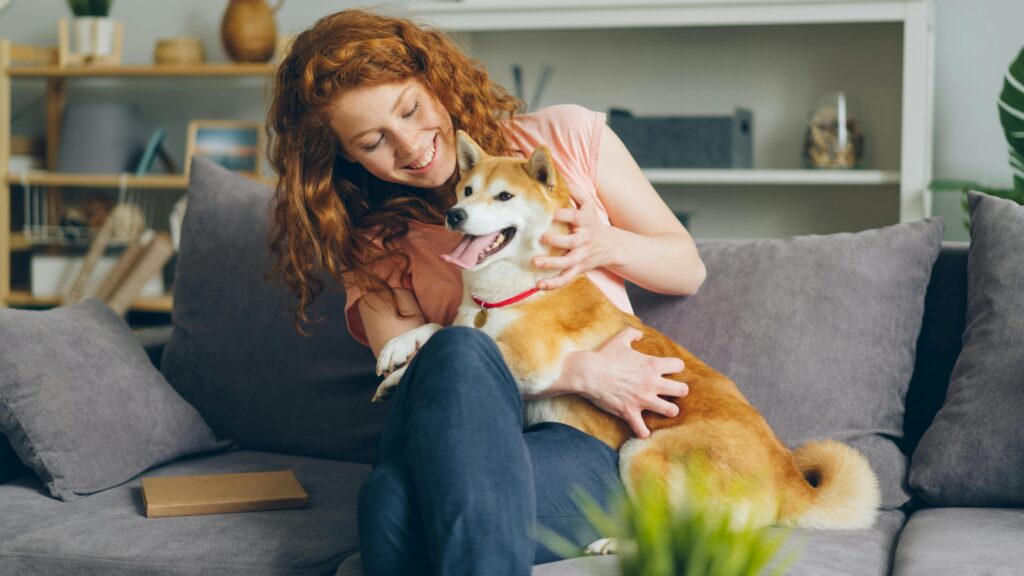
Both cats and dogs benefit from a designated “safe room.” This should be an interior space away from windows, where lights can remain soft and sound can be muffled. Adding familiar scents — blankets, beds, or clothing — supports emotional grounding. White noise, soft music, or calming pheromone diffusers like Adaptil or Feliway may reduce sensory overload.
Soft confinement is not punishment. It is safety. Just like humans needing quiet space during panic, pets need protected environments where their nervous system can decompress.
When Fireworks Begin: Managing the Crisis
On the night of New Year’s Eve, pets need calm leadership. Avoid coddling in a frantic way; instead, stay close, speak softly, and allow them to control their level of contact. Some pets prefer closeness; others need space.
If your pet begins to hyperventilate, becomes glassy-eyed, or exhibits signs of impending shock, keep the room dim and quiet and avoid sudden movements. This stabilizes sensory input and helps prevent panic from escalating.
How Two by Two Pet Support Helps During Firework Season
At Two by Two Pet Support, we understand how overwhelming this season can be for pet owners. Fireworks can trigger not only behavioral emergencies but also medical ones, and our team is trained to support families through crisis situations with compassion, dignity, and expertise.
Knowing you have professional support available can make the difference between panic and preparedness.
Conclusion: Protect Your Pet Before the Celebration Begins
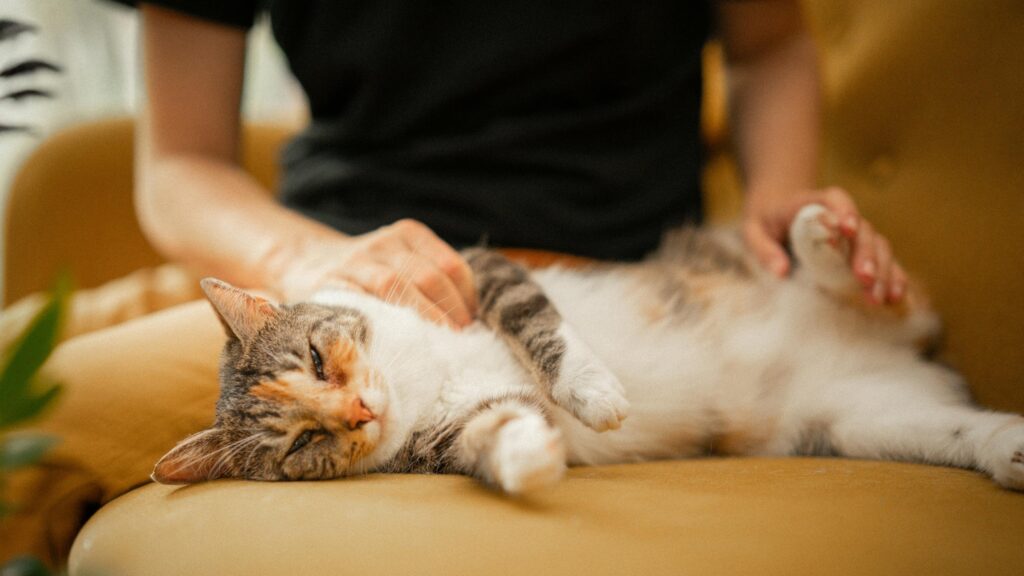
New Year’s Eve fireworks are not just a minor annoyance for pets — they are a serious emotional and physiological threat. Preparing early helps protect your dog or cat from fear-induced shock, dangerous cortisol spikes, and desperate escape attempts.
Your pet depends on you to guide them through this stressful season. With preparation, awareness, and compassion, you can turn a frightening night into a manageable one — and ensure your companion remains safe, supported, and emotionally protected.
For families who need guidance or emergency support, Two by Two Pet Support is here to help every step of the way.