When a rabbit suddenly begins holding its head to one side, it can be frightening. Understanding what this symptom means, and knowing when to seek help, can make a meaningful difference in your pet’s well-being.
Rabbits are remarkably expressive animals, even when they communicate in subtle ways. A change in posture, appetite, or movement may be one of the first indications that something isn’t right.
One particularly concerning symptom is head tilt, sometimes referred to as wry neck or torticollis.
A rabbit experiencing head tilt may hold its head at an unusual angle, struggle to maintain balance, move in circles, or even roll uncontrollably.
Although these symptoms can appear alarming, head tilt is not a diagnosis itself. It is a sign that something may be affecting the rabbit’s balance or nervous system.
The encouraging news? Some underlying conditions are treatable, and many rabbits can continue enjoying a good quality of life with appropriate veterinary care and support.
What Causes Head Tilt in Rabbits?
A rabbit’s sense of balance depends on a complex relationship between the inner ear, brain, and nervous system.
When any part of this system is disrupted, the rabbit may lose its ability to maintain a normal head position or coordinate movement.
Two of the most frequently identified causes are:
1. Encephalitozoon cuniculi (E. cuniculi)
Encephalitozoon cuniculi is a microscopic parasite that can affect a rabbit’s nervous system, kidneys, and sometimes its eyes.
Many rabbits may be exposed to this parasite without ever developing noticeable symptoms.
However, when clinical disease occurs, signs may include:
- Persistent or progressive head tilt
- Loss of coordination and balance
- Uncontrolled rolling or circling
- Abnormal eye movements
- Weakness or other neurological changes
Diagnosing an active E. cuniculi infection can be challenging.
A positive blood test may indicate previous exposure rather than confirming that the parasite is responsible for the rabbit’s current symptoms.
For this reason, veterinarians consider the entire clinical picture before determining an appropriate treatment plan.
2. Middle or Inner Ear Infections
Another important cause of head tilt is an infection involving the middle or inner ear, medically known as otitis media or otitis interna.
These infections can interfere with the structures responsible for balance.
One detail that often surprises pet parents is that a rabbit can have a significant middle or inner ear infection without showing obvious external ear symptoms.
There may be no visible discharge, redness, or scratching.
Even a routine ear examination may not reveal the full extent of the problem.
In certain cases, advanced imaging, such as a CT scan, may help veterinarians identify abnormalities that cannot be detected through a standard examination.
Other possible causes of head tilt include trauma, inflammatory conditions, and less commonly, other neurological disorders.
The important takeaway is that similar symptoms can have very different causes, making veterinary evaluation essential.
Recognizing the Warning Signs
Head tilt rarely exists in isolation.
Pet parents may notice other behavioral or physical changes, sometimes before the head tilt becomes pronounced.
Watch for:
- A persistent sideways head position
- Difficulty walking or standing
- Circling, stumbling, or rolling
- Rapid, involuntary eye movements
- Reduced appetite or refusal to eat
- Fewer or smaller droppings
- Unusual inactivity or signs of distress
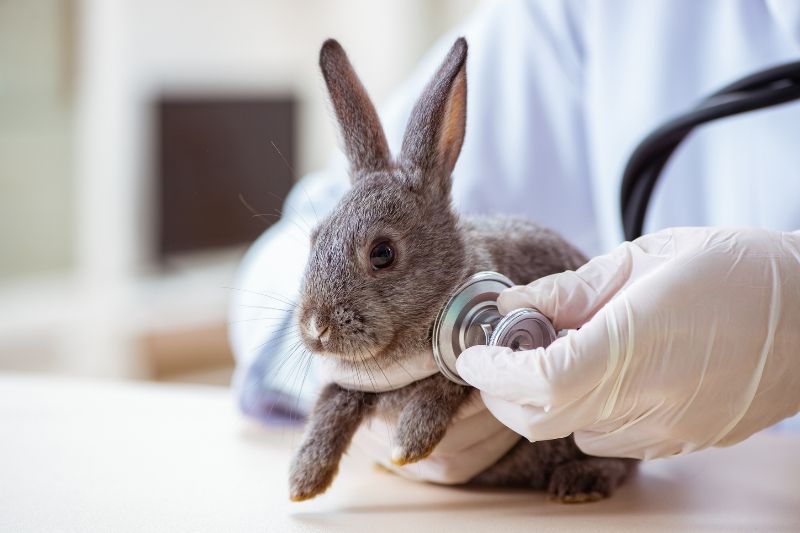
A rabbit showing a new head tilt should receive prompt veterinary attention, ideally from a veterinarian experienced in rabbit or exotic-animal medicine.
If your rabbit is unable to stand, repeatedly rolling, refusing food, or producing significantly fewer droppings, seek emergency veterinary care.
Unlike some other companion animals, rabbits can develop serious gastrointestinal complications when they stop eating.
Delaying care may allow a treatable condition to become considerably more dangerous.
How Is Head Tilt Diagnosed and Treated?
Because head tilt can have multiple causes, there is no single treatment that works for every rabbit.
A veterinarian may begin with a thorough physical and neurological examination, followed by diagnostic testing based on the rabbit’s symptoms.
Depending on the circumstances, this may include bloodwork, testing for E. cuniculi, ear examinations, and diagnostic imaging.
Treatment may involve antiparasitic medication when E. cuniculi is suspected, rabbit-safe antibiotics for certain bacterial infections, and supportive care to address pain, hydration, and nutrition.
Sometimes, when advanced diagnostics are unavailable, a veterinarian may recommend treatment based on the most likely causes while carefully monitoring the rabbit’s response.
Medication should never be administered without veterinary guidance. Some antibiotics commonly used in other animals can cause dangerous gastrointestinal complications in rabbits.
Just as importantly, recovery is not always immediate.
A rabbit may begin eating and moving more comfortably while continuing to hold its head at an angle.
In some cases, a permanent head tilt remains even after the underlying condition has improved.
A lasting head tilt does not automatically mean a rabbit is suffering or has a poor quality of life.
What matters most is how comfortably the rabbit can function in everyday life.
Supporting a Rabbit With Head Tilt at Home
When a rabbit struggles with balance, familiar surroundings can suddenly become difficult to navigate.
Simple environmental adjustments can help reduce stress and prevent injuries during recovery.
Consider the following:
Create a safe, padded space. Soft bedding and a smaller, secure enclosure may help protect a rabbit that is stumbling or rolling.
Keep essentials within easy reach. Food and water should be accessible without requiring the rabbit to climb, stretch excessively, or navigate obstacles.
Minimize unnecessary handling. Sudden movement and frequent repositioning may increase disorientation.
Monitor eating and droppings. Appetite and fecal production are essential indicators of a rabbit’s health.
Follow the veterinarian’s nutritional recommendations. Some rabbits need assisted feeding, but this should only be performed when a veterinarian determines it is safe.
Maintain a calm environment. Reducing noise, stress, and abrupt changes can help a vulnerable rabbit feel more secure.
These measures do not replace medical treatment, but they can make an important difference in daily comfort.
Can a Rabbit Live a Happy Life With a Permanent Head Tilt?
Yes. Many rabbits adapt surprisingly well to lasting changes in balance or head position.
Some regain much of their normal mobility, while others learn to navigate their environment differently.
A rabbit that continues to eat enthusiastically, groom, rest comfortably, explore, and interact with familiar people may still experience a meaningful and enjoyable life.
Rather than focusing exclusively on the angle of the rabbit’s head, consider the bigger picture.
Is your rabbit comfortable?
Can they reach food and water?
Are they maintaining a healthy appetite and producing normal droppings?
Can they move without repeated injury or significant distress?
Do they still show interest in their surroundings?
These observations, together with veterinary assessments, can help families understand whether their rabbit is adapting successfully or needs additional support.
When Treatment Is No Longer Enough: Understanding Quality of Life
Not every rabbit responds to treatment in the same way.
Some experience significant improvement. Others may face persistent neurological problems, recurrent infections, or complications that make daily activities increasingly difficult.
When a condition becomes chronic or progressive, conversations about quality of life become especially important.
For pet parents, this can be an emotionally complicated experience.
The desire to keep trying is often accompanied by the fear of allowing a beloved companion to suffer.
There is rarely one simple answer.
A compassionate quality-of-life assessment considers more than a diagnosis. It looks at the rabbit’s ability to eat, move, rest, remain clean, and experience comfort.
A permanent head tilt alone is not a reason to consider euthanasia. However, persistent suffering that cannot be adequately relieved may warrant a thoughtful discussion with a veterinarian about available options.
The goal is never to make a decision based on appearance or disability, but to understand the animal’s actual experience.
Compassionate Support for Every Stage of the Journey
At Two by Two Pet Support, we understand that the bond between a pet and their family isn’t defined by species, size, or the number of years spent together.
Rabbits may be small, but the place they hold in our lives can be enormous.
Whether a family is navigating a new diagnosis, adjusting to a pet’s changing needs, or facing difficult end-of-life decisions, compassion and clear information matter.
Our mission is to help families approach these sensitive moments with dignity, understanding, and respect for the unique bond they share with their companions.
For rabbits experiencing head tilt, the first step is always an appropriate veterinary evaluation and exploration of available treatment options.
When serious illness raises concerns about long-term comfort, families deserve honest, thoughtful conversations about what is best for their pet.
Because compassionate care is not only about how long our pets live.
It’s also about how well they live, and how lovingly we care for them along the way.