Lessons we’ve learned from the families who have trusted us to be there for one of the hardest moments of their lives.
There is a particular kind of silence that often fills a room when a family realizes they may be approaching the end of their pet’s life. It is not necessarily a sad silence at first. Sometimes it comes after a long conversation about medications, appetite, mobility, sleep, or the things their pet used to enjoy. Someone may have spent the last twenty minutes explaining every little change they’ve noticed, and then, almost as if they have been waiting for the right moment to say it out loud, they look at us and say, “He’s still eating.”
We hear that sentence often. It can sound like a statement, but it is usually much more than that. Sometimes it means, “Does this mean we still have time?” Sometimes it means, “Please tell me I’m not making the wrong decision.” And sometimes it is simply the last piece of hope a person is holding onto because accepting that their pet may be nearing the end feels almost impossible. After being invited into so many homes during these incredibly personal moments, we have learned not to rush past that sentence. We understand what is underneath it, because behind almost every question about when to say goodbye is the same thing: a family desperately wishing there were a way to know with absolute certainty.
There isn’t.
What we have learned, however, is that saying goodbye rarely begins on the day a family calls us. More often, it begins quietly, weeks or even months before, through changes that are so gradual they become difficult to recognize. A dog who used to follow someone from room to room begins staying downstairs. A cat who spent every afternoon on the windowsill starts sleeping on the floor instead. A pet who once became excited when the leash came out still enjoys going outside, but the walk gets shorter and shorter. None of these changes necessarily feels significant when it happens. Aging seems like the obvious explanation, and sometimes it is. Other times, these small adjustments are the way an animal begins adapting to discomfort.
As Dr. Owens often tells families, “In my experience, pets rarely show pain the way people expect.” That is something we have seen repeatedly. People tend to imagine that a pet in significant discomfort will cry, refuse food, or make it unmistakably clear that something is wrong. Animals, however, are often much more subtle. They compensate. They change their routines. They rest more. They stop doing the things that have become difficult and find alternatives that allow them to remain comfortable. By the time a family notices one major change, there may already have been dozens of smaller ones that seemed insignificant when considered individually.
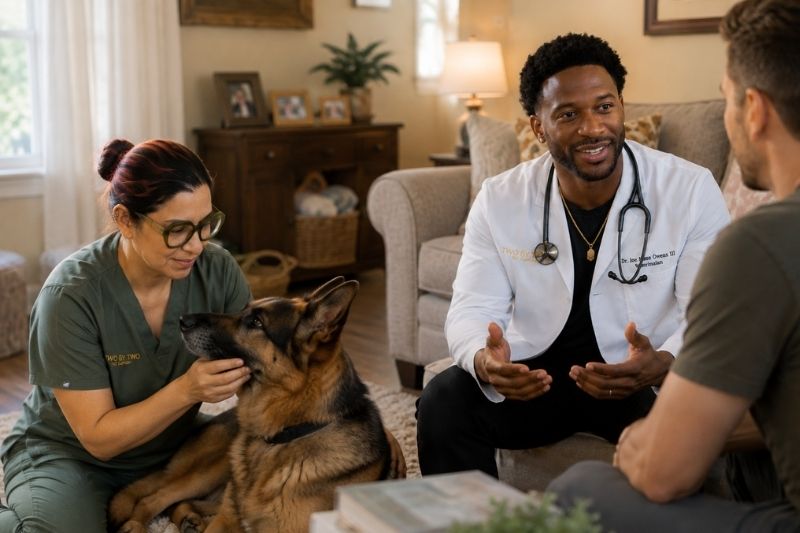
One family we remember had become increasingly concerned because their senior German Shepherd was suddenly having difficulty getting up and seemed unusually lethargic. When they first called, the immediate concern was that something dramatic had happened that day. As we talked with them, though, they began remembering what had been happening over the previous several weeks. His walks had become shorter, he had stopped following them upstairs, and he had gradually lost interest in some of the activities that had always been part of his routine. None of those changes had felt alarming at the time. They had explained each one separately: he was getting older, the weather had been warm, maybe he had simply had a bad night. It was only when they looked at all of those changes together that they realized they weren’t looking at a single bad day. They were looking at a pattern.
That is one of the hardest things about caring for an aging or seriously ill pet: when you see them every day, change happens so gradually that yesterday becomes the only comparison that feels real. A pet can decline considerably over several months while still looking almost exactly the same from one morning to the next. Families are not failing to notice because they don’t care. In fact, it is often because they care so deeply that they continue to see the pet they have known for years, rather than immediately recognizing how much their circumstances have changed.

This is also why we hear phrases like, “Maybe one more week,” or, “I don’t think it’s time,” so often. We understand the instinct behind them. Nobody wants to wonder whether they said goodbye too early, and nobody wants to look back and think there was another comfortable day they could have shared. There is a very human desire to find one unmistakable sign that will remove all doubt, but end-of-life decisions rarely offer that kind of certainty. Instead, families are often trying to make sense of a collection of small observations while their emotions are telling them that perhaps tomorrow will be different.
Sometimes it is.
Sometimes tomorrow really is a better day.
And that matters.
We would never want a family to believe that a good day somehow doesn’t count because their pet is also declining. If a dog wakes up wanting to go outside, enjoys a favorite meal, spends an afternoon in the sunshine, or suddenly seems more like themselves again, those moments are meaningful. Families should enjoy them rather than immediately wondering what they mean for the future. At the same time, one good day does not necessarily erase weeks of difficult ones. Both things can be true: a pet can have a genuinely wonderful day and still be experiencing an overall decline. Understanding that distinction can be difficult because grief and hope rarely take turns; they tend to exist together.
Perhaps that is why “Yesterday was a good day” can be such a complicated sentence. Sometimes it is simply gratitude, and sometimes it is a family asking whether they have permission to keep hoping. There is nothing wrong with hope. There is nothing wrong with wanting another day. The important thing is to look at the whole story rather than allowing one particularly good or particularly difficult day to define it.
We have also learned that families often know more than they think they do. They may not have veterinary terminology for what they are seeing, but they know their animal’s normal better than almost anyone. They know how quickly their dog normally gets up when someone says the word “walk.” They know which chair their cat always chooses, how their pet asks for attention, what excitement looks like, and how their companion behaves when they are comfortable. When a family says, “He’s just not himself,” we listen carefully, because that observation comes from years of knowing that animal intimately.
That does not mean families are expected to make difficult medical decisions on their own. Quite the opposite. Veterinary guidance matters enormously, particularly when pain, chronic disease, mobility, or other medical conditions are involved. But the family’s observations are an essential part of that conversation, because quality of life cannot always be understood through a medical chart alone. It is also found in the ordinary details of the life the pet is living at home.
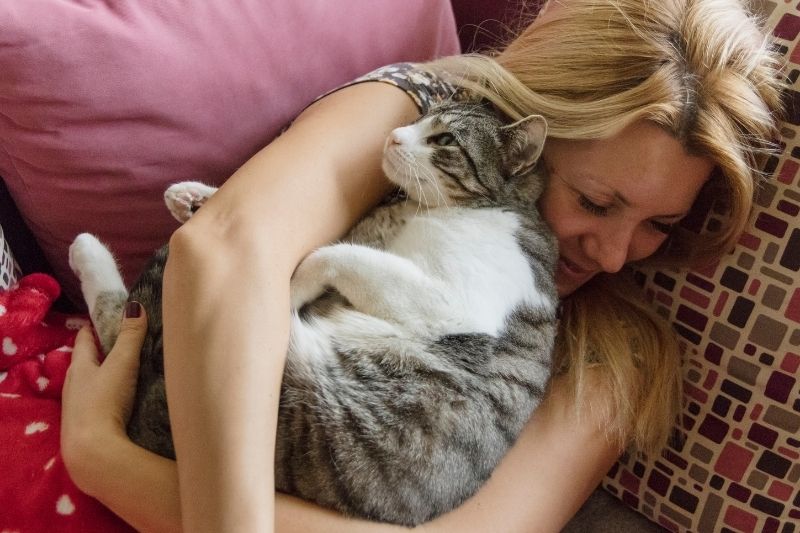
This is one of the reasons we believe asking for help should never be interpreted as giving up. Families sometimes hesitate to contact hospice or end-of-life support because they believe making that call means they have already decided to say goodbye. It doesn’t. Sometimes a family is simply looking for guidance because they aren’t sure what they are seeing. Sometimes they want to understand whether their pet could benefit from hospice care and additional support. Sometimes they need help making their home more comfortable for an aging animal. And sometimes they have reached the point where they know a goodbye is approaching but need someone experienced to help them navigate it.
There is no single outcome that every family should be expected to reach.
Our role is not to tell a family when they should stop loving, hoping, or waiting. It is to meet them where they are, listen to what they are seeing, provide compassionate professional support, and help them make decisions based on their pet’s comfort and quality of life. Every family has a different relationship with their animal, and every animal has a different personality, history, and way of communicating.
We have seen families who wanted everyone present and families who wanted the final moments to be completely private. We have seen people talk through the entire visit because telling stories was how they coped, and we have seen others sit quietly because words simply weren’t available. Some people want photographs and keepsakes; others want nothing documented because the memories they carry are already enough. There is no correct way to say goodbye, just as there is no correct way to grieve.
What matters is that the goodbye belongs to the family and the pet.

Over time, we have also learned that people often place far too much pressure on the final day. They worry about whether they chose the right room, whether they waited the right amount of time, whether everyone was present, whether they said enough, or whether they somehow should have known exactly what to do. Those questions can become especially painful after a loss, when there is no longer an opportunity to change anything.
But a pet’s life is not defined by its final day.
The final day is one moment in a relationship that may have lasted more than a decade. It is the dog who waited by the door every afternoon, the cat who slept beside someone every night, the companion who stayed close during a difficult divorce, illness, move, pregnancy, or loss. It is the pet who grew up alongside the children and was there for birthdays and holidays, ordinary mornings and difficult nights. It is all the small routines that seemed insignificant while they were happening and become priceless once they are gone.
That is what families ultimately remind us of.
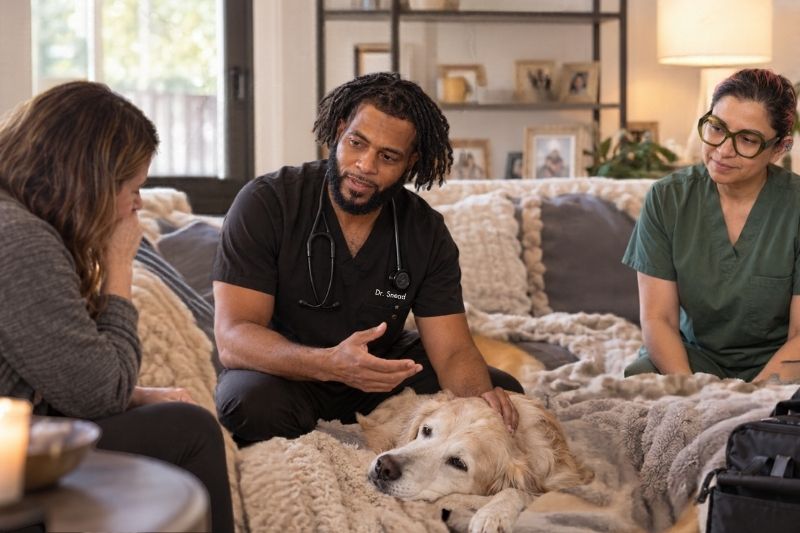
When we arrive at a home, we may be there because a family needs help with one of the final decisions of their pet’s life, but we are also being invited into the story of a relationship that began long before we arrived. We hear about the puppy who destroyed the couch, the kitten who hid under the bed for three days, the dog who hated thunderstorms, the pet who somehow always knew when someone in the family was having a difficult day. We hear laughter alongside tears, and sometimes the laughter is what makes the tears possible.
After hundreds of families have trusted us to be present during these moments, we have learned that they rarely need someone to tell them how much they love their pet. They already know. What they often need is reassurance that uncertainty is normal, that changing their mind does not mean they have failed, that a good day does not erase a difficult month, and that there is no perfect way to say goodbye.
We have also learned that families rarely regret the years they spent caring for their animals. They don’t regret the medications, the sleepless nights, the canceled plans, the expensive treatments, the special diets, the extra trips outside, or the countless accommodations they made along the way. What they worry about is whether they did enough at the end.
And perhaps that is where the perspective changes.
The goal was never to create a perfect final moment. The goal was to create a lifetime in which that final moment could exist because there was so much love before it.
We cannot make saying goodbye painless. We cannot give a family certainty when there is no certainty to give. But we can remind them that the relationship they built with their pet is much bigger than the decision they eventually had to make.
The last day is not the whole story.
It is simply the last page.

And after everything we have learned from the families who have welcomed us into their homes, perhaps the most important lesson is that our pets don’t measure the quality of their lives by how many days they were given. They experience it through the people who cared for them, the routines they shared, the comfort they found, and the simple reassurance of being home with the person they trusted.
They knew they were loved long before we ever arrived.
And they knew it when you stayed.